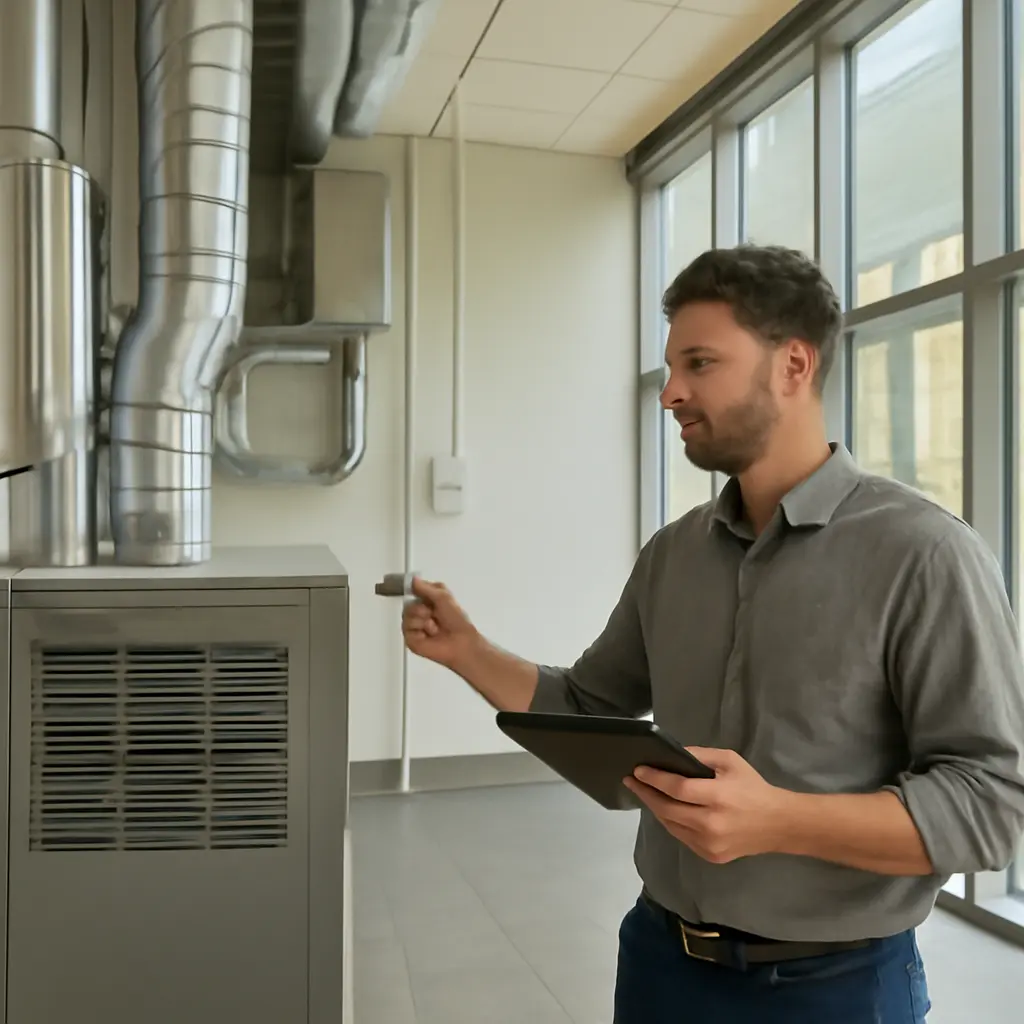
Connected devices are physical objects equipped with sensors, software, and network links that collect or exchange data; the Internet of Things (IoT) is the wider system that lets those objects communicate and support useful services. Behind the scenes, IoT breakthroughs depend on advances in low-power sensors, wireless standards, cloud and edge computing, security, and data analysis. Their significance is already measurable: the International Energy Agency estimates that connected devices in buildings could help cut global building energy use by about 10% by 2040, while the IoT Analytics research firm counted 16.6 billion connected IoT devices worldwide at the end of 2023. Understanding how these systems work—and how they are secured and applied—shows both the promise and the responsibilities of a more connected world.
How connected-device architecture enables IoT breakthroughs
A connected-device architecture is the arrangement of hardware, communications, software, and services that allows a physical object to sense conditions, exchange information, and trigger an action. The National Institute of Standards and Technology (NIST) describes IoT as an interconnected environment of networked components that interact with the physical world. In practice, a typical system includes a device, a connection, a platform that processes data, and an application or operator that uses the results.
These layers are interdependent. A sensor may detect a temperature change, but its value depends on accurate measurement, reliable communication, timely analysis, and a safe response. Common architectural forms include cloud-connected devices, edge-computing systems, industrial IoT networks, and low-power sensor networks. The choice depends on latency, bandwidth, energy use, privacy, and the consequences of failure.
Sensors and actuators: turning physical conditions into data and action
Sensors measure physical conditions such as temperature, motion, pressure, location, or air quality; actuators convert commands into actions such as opening a valve or adjusting a motor. Together they form the device-level interface between digital systems and the physical world. A smart thermostat, for example, combines temperature sensing with control of heating and cooling equipment.
The U.S. Department of Energy identifies smart controls and building automation as important tools for improving energy management. Their performance depends on calibration, placement, and maintenance: a poorly positioned sensor can produce misleading readings, while an actuator that fails to respond can undermine the entire system. These components are also found in medical monitors, agricultural soil sensors, and factory equipment.
Connectivity: selecting the right network for the job
Connectivity is the wired or wireless link through which devices exchange measurements and commands. Wi-Fi and Ethernet suit many high-bandwidth settings; Bluetooth Low Energy supports nearby, battery-powered devices; and cellular networks serve mobile or geographically dispersed equipment. Low-power wide-area technologies, including LoRaWAN and cellular IoT variants, can send small amounts of data over long distances while conserving battery life.
There is no universally best connection. Designers weigh coverage, data rate, power consumption, cost, interference, and availability. The 3rd Generation Partnership Project (3GPP) has standardized cellular IoT technologies such as LTE-M and NB-IoT for applications that need broad-area connectivity and low-power operation. For devices in a home, Matter offers an interoperability standard intended to help products from different manufacturers work together across supported ecosystems.
Cloud and edge computing: processing data near or far
Cloud computing processes and stores data in remote data centers, while edge computing handles some computation close to the device or the local network. Cloud services are useful for aggregating information across many sites and running resource-intensive analysis. Edge processing can reduce delay, limit the volume of data sent over a network, and keep some information local.
The two approaches often work together. A factory robot may need a rapid local response to stop an unsafe movement, while longer-term production trends can be analyzed in the cloud. This division is especially important where interruptions in internet access could affect safety or operations. Edge systems still need secure updates, monitoring, and reliable fallback behavior; moving computation closer to a device does not remove the need for cybersecurity.
How IoT breakthroughs create value across industries
IoT breakthroughs occur when connected sensing and control make a process more observable, responsive, or efficient than it was before. The benefits vary by setting: consumer devices emphasize convenience, industrial systems prioritize uptime and safety, and public infrastructure often focuses on service quality and resource use. The following examples show how shared technologies support distinct applications.
Smart buildings and energy management
In smart buildings, connected thermostats, occupancy sensors, lighting controls, and equipment monitors help operators match energy use to real conditions. The International Energy Agency has reported that digitalization and smart controls can improve building efficiency, and its analysis estimates that connected devices could help reduce global building energy use by around 10% by 2040 under the relevant efficiency scenario.
A practical system can use occupancy data to reduce heating, cooling, or lighting in unused areas, while equipment sensors can flag unusual performance before a breakdown. These outcomes are not automatic: savings depend on commissioning, occupant needs, data quality, and ongoing maintenance. A useful illustration for this section would be a chart comparing a building’s energy consumption before and after controls are installed, with weather and occupancy accounted for.
Industrial IoT and predictive maintenance
Industrial IoT connects machinery, production systems, and monitoring software to improve process visibility and support timely decisions. Vibration, temperature, and power sensors can reveal changes in equipment behavior. Analytics can then help maintenance teams investigate an emerging fault before it causes an unplanned shutdown.
The U.S. Department of Energy’s operations and maintenance guidance emphasizes that maintenance strategies should be matched to equipment and operating conditions. Predictive maintenance is therefore not simply “install sensors and prevent every failure”: it requires a dependable baseline, relevant diagnostics, skilled staff, and a plan for acting on alerts. Industrial deployments also need segmentation between operational technology and general business networks to limit the impact of a cyber incident.
Healthcare, wearables, and remote monitoring
Connected medical devices and consumer wearables can record measures such as heart rate, activity, or blood glucose and transmit information for review. Remote patient monitoring may help care teams follow selected patients outside a clinic, while wearable devices can support personal awareness and health research.
These uses require careful interpretation. A consumer device reading is not necessarily a medical diagnosis, and a connected clinical product must meet applicable regulatory and privacy requirements. The U.S. Food and Drug Administration provides guidance on cybersecurity for medical devices, including the need to address security throughout a product’s life cycle. In healthcare, dependable identity checks, encryption, access controls, and clear escalation procedures are essential alongside accurate sensors.
Agriculture, logistics, and connected infrastructure
In agriculture, soil-moisture sensors and weather data can inform irrigation decisions; in logistics, trackers can report the location and condition of goods; and in cities, connected infrastructure can monitor traffic, lighting, water systems, and environmental conditions. These applications turn scattered observations into information that can guide operations.
The Food and Agriculture Organization of the United Nations has highlighted digital technologies, including precision agriculture, as tools for improving agricultural efficiency and resilience. Results depend on affordable connectivity, interoperable equipment, local expertise, and data that represent conditions on the ground. A map of sensor readings or a time-series chart of soil moisture and irrigation would help illustrate how measurements can support decisions without replacing human judgment.
How IoT security and interoperability shape trust
IoT security and interoperability determine whether connected systems can be trusted and work together over time. Security protects devices, networks, and information from misuse or disruption. Interoperability allows products and services from different vendors to exchange information or operate together under shared technical rules. Both are essential because a device can remain in use for years after its original software or support plan has changed.
Device security and the product life cycle
Device security is the set of safeguards that protect a connected product from unauthorized access, data exposure, and harmful control. NIST’s baseline guidance for IoT device cybersecurity identifies capabilities such as device identification, secure configuration, data protection, restricted logical access, secure software updates, and cybersecurity state awareness.
The scale of deployment makes basic protections consequential. IoT Analytics estimated 16.6 billion connected IoT devices at the end of 2023 and projected continued growth. Each device can add a point that must be inventoried, updated, and eventually retired. Manufacturers and operators should use unique credentials, provide security updates, minimize collected data, and disclose how long support will last. Users should replace default passwords and install updates when available.
Interoperability, standards, and data governance
Interoperability is the ability of systems to exchange and use information reliably. It may be supported by common communication standards, shared data formats, application programming interfaces, and certification programs. Without it, organizations can become locked into a single vendor or face costly integrations between incompatible devices.
Standards such as Matter address compatibility in smart homes, while industry-specific protocols support fields such as manufacturing and building automation. Technical compatibility alone is not enough: organizations also need rules for who owns data, who may access it, how long it is kept, and whether it can be reused. Clear governance helps prevent a connected system from collecting more information than its purpose requires.
Privacy, resilience, and responsible deployment
Privacy concerns arise when connected devices collect information about people, homes, workplaces, or movement. Resilience concerns whether essential services can continue during network outages, hardware failure, or cyberattacks. Responsible deployment addresses both by limiting data collection, explaining system behavior, controlling access, and designing safe fallback modes.
A resilient design might allow a building’s basic controls to function locally if its cloud connection is lost, or give operators a manual override for critical equipment. Organizations should assess risks before deployment, test recovery procedures, monitor devices throughout their service life, and plan for secure disposal. These measures turn IoT from a collection of gadgets into an accountable operational system.
Conclusion: building useful, secure connected systems
Connected-device architecture brings together sensors and actuators, communications, and cloud or edge computing. Across buildings, industry, healthcare, agriculture, logistics, and infrastructure, those elements can improve visibility and help people respond to changing conditions. At the same time, the growth of connected devices makes security, interoperability, privacy, and long-term support central design requirements rather than optional extras.
The next IoT breakthrough is not simply a larger number of devices; it is a system that produces useful outcomes while remaining dependable, understandable, and secure. Organizations planning a deployment should start with a clearly defined need, choose standards and networks suited to that need, measure results, and establish a lifecycle plan for updates and retirement. Readers can explore NIST’s IoT cybersecurity guidance, the IEA’s analysis of digitalization and energy, and the relevant standards for their industry before adopting connected technology.
Sources: National Institute of Standards and Technology, Considerations for Managing Internet of Things (IoT) Cybersecurity and Privacy Risks, https://nvlpubs.nist.gov/nistpubs/ir/2019/NIST.IR.8228.pdf; National Institute of Standards and Technology, IoT Device Cybersecurity Capability Core Baseline, https://csrc.nist.gov/pubs/ir/8259/a/final; IoT Analytics, State of IoT 2024: Number of Connected IoT Devices Growing 13% to 18.8 Billion Globally, https://iot-analytics.com/number-connected-iot-devices/; International Energy Agency, Digitalisation and Energy, https://www.iea.org/reports/digitalisation-and-energy; U.S. Department of Energy, Operations & Maintenance Best Practices: A Guide to Achieving Operational Efficiency, https://www.energy.gov/femp/articles/operations-and-maintenance-best-practices-guide-achieving-operational-efficiency; 3rd Generation Partnership Project, Cellular Internet of Things, https://www.3gpp.org/technologies/nb-iot; Connectivity Standards Alliance, Matter, https://csa-iot.org/all-solutions/matter/; U.S. Food and Drug Administration, Cybersecurity in Medical Devices: Quality System Considerations and Content of Premarket Submissions, https://www.fda.gov/regulatory-information/search-fda-guidance-documents/cybersecurity-medical-devices-quality-system-considerations-and-content-premarket-submissions; Food and Agriculture Organization of the United Nations, The State of Food and Agriculture 2022: Leveraging Automation in Agriculture for Transforming Agrifood Systems, https://www.fao.org/3/cb9479en/cb9479en.pdf.